Fashion Video Hooks for Cold Audiences vs Warm Retargeting
November 14, 2026
fashion video hook strategy by audience temperature is the clearest path to better return on ad spend.
- Cold audiences require pattern-interrupt hooks that create immediate curiosity without assuming any prior brand knowledge.
- Warm retargeting audiences respond to hooks that reference familiarity, urgency, and specific product details they have already seen.
- The first two to three seconds of a retargeting video can directly acknowledge browsing behaviour to increase relevance.
- Creative fatigue hits retargeting audiences faster than cold audiences, so hook variants must be refreshed more frequently.
- Separating cold and warm creative in your production workflow reduces wasted spend and sharpens per-audience messaging.
Why Audience Temperature Changes Everything
A cold audience is encountering your brand for the first time. They have no emotional context, no product memory, and no reason to trust you yet. The cold audience creative you serve them must introduce the brand, differentiate it, and create intrigue all at once. A warm audience already carries a mental file on your brand. They have watched a video, clicked through to your site, added to cart, or engaged with a previous ad. The gap between these two psychological states is enormous, and a hook designed for one will almost always underperform for the other.
Platform algorithms on TikTok, Instagram Reels, and YouTube Shorts reward watch time and completion rate. A cold-audience hook that is too product-specific will cause new viewers to skip immediately. A retargeting hook that is too broad will make warm viewers feel unrecognised. Matching the hook to the audience state is not creative theory. It is a direct conversion lever.
Cold Audience Hooks That Stop the Scroll
Cold audiences are scrolling on autopilot. The job of a fashion video hook for cold traffic is to break that autopilot state within the first two seconds. Several proven structures work consistently across platforms.
- The bold visual contrast hook: open on an unexpected styling choice, an unusual colour pairing, or an outfit detail that looks wrong before it looks right. Confusion creates a micro-pause that converts to watch time.
- The identity hook: open with a phrase that calls out a specific person. “If you wear a size 16 and hate shopping” or “For anyone who refuses to wear beige” immediately signals relevance to a subset of viewers who feel seen.
- The transformation tease: show the finished outfit in the first frame, then cut back to the starting point. The brain wants to know how to get from one to the other.
- The social proof number hook: open on a statistic or a quantity. “47,000 orders later, here is why this dress sells out every restock” borrows credibility before the viewer knows your brand.
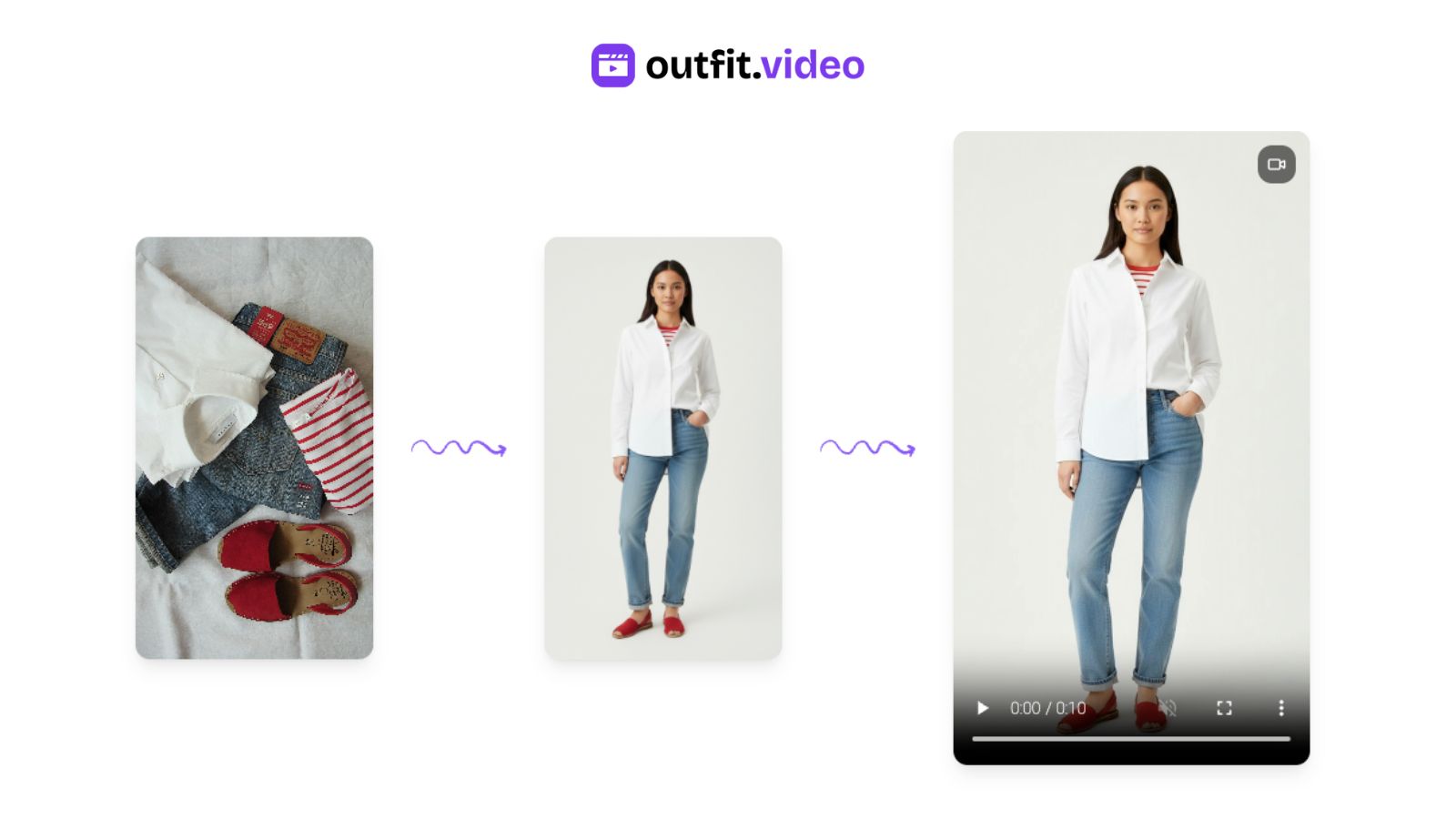
None of these hooks assume prior brand knowledge. They work on pure human psychology: curiosity, identity recognition, and social proof. For brands building a large library of cold-audience creative, tools like Outfit Video allow you to generate multiple hook variants from the same outfit photos, making it practical to test several approaches simultaneously without additional shoot costs.
When budgeting for creative testing at the cold-audience stage, it helps to understand how much to allocate per variant. The fashion video ad creative testing budget guide covers sensible thresholds for iterating on cold creative without overspending before you have a signal.
Retargeting Hooks for Warm Audiences
A warm audience already trusts you enough to have engaged. The retargeting video hook should acknowledge that implicitly, even if it cannot reference the specific action they took. The tone shifts from “stop and notice me” to “you already know this, here is why now is the moment.”
Effective retargeting hook structures include the following.
- The objection-removal hook: open by addressing the most common reason someone would abandon a purchase. “Not sure how it fits? Here is what a size 12 looks like in real life” directly speaks to hesitation without being aggressive.
- The scarcity or urgency hook: “Three colours left” or “Back in stock for the last time this season” works for warm audiences because they already want the product. Scarcity simply removes the reason to delay.
- The review-led hook: open with a customer’s words rather than brand language. First-person testimony in the first two seconds feels like a recommendation from a peer, not an ad. This technique is covered in depth in the post on turning customer reviews into AI outfit video clips.
- The detail hook: zoom in on a specific product feature the viewer likely noticed during their earlier browsing session. A close-up of a pocket, a fabric texture, or a zipper detail reactivates the memory of why they were interested without repeating the full product introduction.
Retargeting hooks can be shorter than cold hooks. Recognition is already there, so two seconds of the right visual or the right phrase is enough to re-engage. The body of the video does the closing work rather than the introduction work.

Structural Differences in Video Pacing
Beyond the opening seconds, cold and warm videos differ in their overall structure. A cold-audience video typically needs a longer middle section that builds context: who the brand is, what makes the garment worth caring about, and why this particular aesthetic fits this particular viewer. The CTA at the end tends to be low-commitment, something like “discover the range” or “see how to style it.”
A retargeting video compresses or skips most of that middle section. The viewer already has the context. The structure moves quickly from hook to proof to CTA, and the CTA can be direct: “buy now,” “claim your size,” or “complete your order.” The length difference between the two is real. Cold creatives often perform better at 20 to 40 seconds on Reels and TikTok. Retargeting creatives can convert effectively at 8 to 15 seconds because there is nothing to introduce.
Tracking where viewers drop off within each video type gives you data to refine both. Understanding how to read retention graphs to fix weak outfit clips is especially useful when you are running cold and warm creative simultaneously and need to diagnose which part of which funnel is leaking.
Managing Creative Fatigue in Retargeting
Creative fatigue is a faster and more damaging problem for retargeting audiences than for cold ones. Cold audiences are constantly refreshed by new users entering the top of your funnel. Warm audiences are a finite pool, and those users see your retargeting creative repeatedly within a compressed window. When a hook stops generating any response because it has been seen too many times, frequency becomes a liability.
Signs that retargeting creative has fatigued: falling click-through rate despite stable frequency, rising cost per conversion, and declining video view duration. The standard fix is to rotate hooks while keeping the body of the video the same. Changing the first two to three seconds while preserving the proof and CTA sections is usually enough to reset performance. This makes hook-only variants one of the most valuable uses of AI video generation in a fashion brand’s paid media workflow.
Building a Systematic Hook Library
The brands that consistently outperform on paid social treat hooks as an asset class rather than an afterthought. A systematic hook library contains tagged variants sorted by audience temperature, product category, platform format, and seasonal relevance. When a cold creative stops performing, there is a ready replacement. When retargeting fatigue appears, a new hook variant can go live the same day.
Building this library does not require a full production team. AI video tools that generate multiple clip variants from the same source photos make it practical to maintain a large hook inventory. Pairing that production capacity with a clear approval process ensures new variants reach the ad account quickly. The fashion video approval workflow guide outlines how to structure sign-off so that hook variants clear internal review without delays that erase their relevance.
A well-maintained hook library also benefits from consistent formatting decisions. Aspect ratio, text placement, and opening frame composition should follow a template for each platform so that producing new variants stays fast and predictable.
FAQ
What makes a fashion video hook effective for a cold audience?
An effective cold audience creative hook creates immediate curiosity or recognition without relying on any prior knowledge of the brand. It uses visual contrast, identity language, or social proof in the first two seconds to earn attention from a viewer who has no reason yet to care about the product.
How is a retargeting video hook different from a cold one?
A retargeting video hook assumes familiarity. It addresses objections, introduces scarcity, or surfaces a specific product detail that reactivates interest in a viewer who has already engaged. It does not need to introduce the brand and can move directly toward a conversion-focused message.
How often should retargeting hooks be refreshed to avoid creative fatigue?
There is no universal rule, but most fashion advertisers running active retargeting pools should audit hook performance weekly. When click-through rate drops or cost per conversion rises without a change in audience size or bidding strategy, it is a strong signal that the hook needs to rotate. Preparing two to three hook variants per retargeting creative before launch reduces the gap between fatigue detection and replacement.
Can the same video be used for both cold and warm audiences?
It is possible but rarely optimal. A video built for cold audiences typically includes too much introductory context to feel relevant to a warm viewer, while a retargeting-focused video often assumes knowledge that a cold viewer does not have. If budget or production capacity requires using a single asset, the cold-audience structure is safer across both segments, though it will underperform in retargeting compared to a purpose-built hook.
Which platforms benefit most from separating cold and warm fashion video creative?
TikTok, Instagram Reels, and Facebook are the platforms where separating cold and warm fashion video hook strategy produces the clearest performance difference, because all three support granular audience segmentation and their algorithms respond strongly to early engagement signals. YouTube Shorts and Pinterest also benefit, particularly for brands with significant retargeting pool sizes built from product page traffic.
Ready to turn your outfit photos into scroll-stopping videos? Try Outfit Video free and create your first AI fashion video in minutes.
Ready to turn your outfit photos into scroll-stopping videos? Try Outfit Video free and create your first AI fashion video in minutes.